
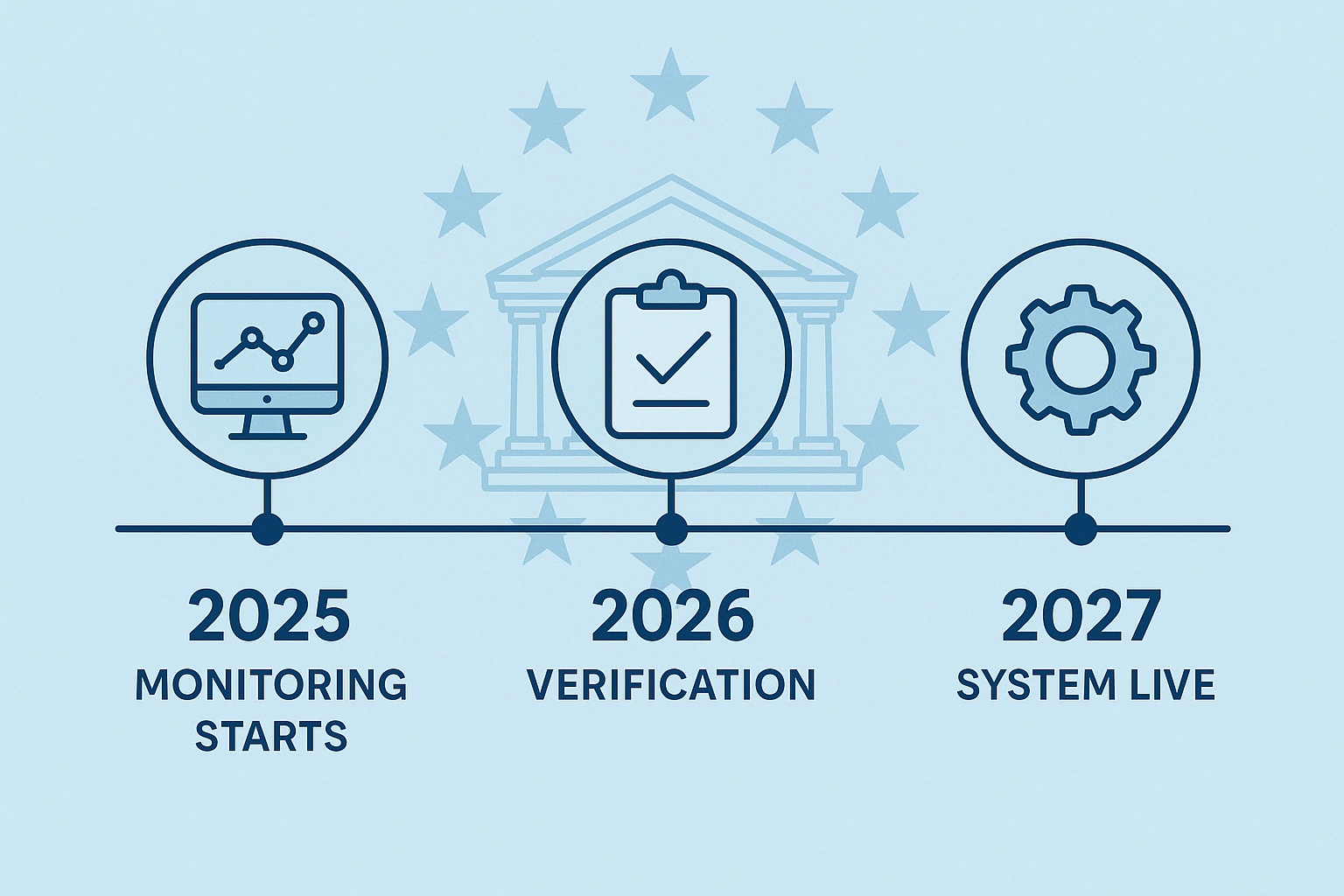
The rollout of ETS2 is a phased process designed to ensure an orderly start. For property owners, these dates are more than just items on a legislative calendar; they are markers on the road to a new energy cost landscape. Here are the key dates you need to know.
The Countdown to ETS2: A Phased Implementation
2025: The Foundation is Laid: Although the system won't be fully operational for another two years, 2025 is a critical preparatory year. Monitoring and reporting of emissions by fuel suppliers begins this year. As of 1 January 2025, all regulated entities are required to hold greenhouse gas emissions permits and have approved monitoring plans in place. This means the framework for tracking the emissions that will eventually be priced is being established right now.
2026: Verification Begins: Next year, the data gathered throughout 2025 will undergo its first round of official checks. Starting in 2026, all reported emissions data must be verified by an accredited third party. This step ensures the accuracy and integrity of the data before the market officially launches.
2027: The System Goes Live: This is the year ETS2 becomes fully operational. The auctioning of carbon allowances will begin, establishing a market price for CO2 emissions from heating and transport fuels. To ensure a smooth start and prevent initial price shocks, the first year will see a 30% higher volume of allowances released to the market for liquidity. Safeguards, such as the Market Stability Reserve, are also in place to manage price volatility.
2028: The First Compliance Cycle Completes: The first full compliance cycle concludes in 2028. By 30 April, fuel suppliers must submit their verified emissions reports for the previous year. Following this, they have until 31 May to surrender the corresponding number of allowances. This annual cycle of monitoring, reporting, verification, and surrendering will continue indefinitely from this point forward.
A Key Safeguard: The Potential Postponement
The ETS2 legislation includes a built-in safety measure. If energy prices are deemed "exceptionally high" in 2026, the full launch of the system could be postponed by one year, to 2028. While this provides a buffer against extreme market conditions, it should not be seen as a reason to delay preparation. The system is coming; this clause simply offers flexibility on the precise start date.
Why This Timeline Matters for You
The key takeaway is that the clock is already ticking. The start of monitoring this year signals that the mechanism is moving forward. With the market set to launch in 2027, property owners have a clear, albeit narrowing, window to prepare for the financial impacts. Taking proactive steps now—such as conducting energy assessments and planning efficiency upgrades—will put you in a stronger position to mitigate the higher energy costs to come.
Now that we have covered the 'when', our next article will explore the critical question of 'how much'. We will take an honest look at who really pays for ETS2 and the expected financial impact on consumers. Join us next week.
